
More than 35% of hair restoration surgeries performed at DHI are corrective procedures. These include repairing scars caused by previous FUT and FUE hair transplant techniques, accidents, and various alopecia disorders.
Scars caused by accidents are often deep and permanent. However, with the DHI technique and MPG, they can be treated effectively—often so naturally that even the patient cannot identify the treated area.
FUE and FUT hair transplant techniques involve incision-based implantation, which may leave visible scars. Using MPG and DHI, these scars can be permanently concealed without pain or discomfort.
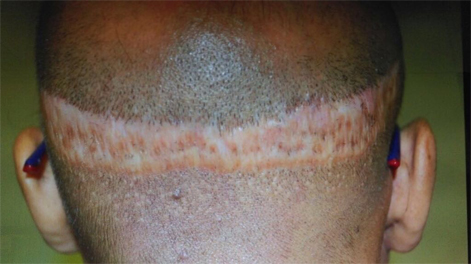
Conditions such as traction alopecia, scarring alopecia, and triangular alopecia commonly lead to scalp scars. Our DHI and MPG treatments offer safe and natural solutions for these conditions.
MPG is a permanent cosmetic procedure that mimics natural hair follicles on the scalp, giving the appearance of a close buzz cut. It is ideal for treating male pattern baldness, alopecia areata, and scarring alopecia.
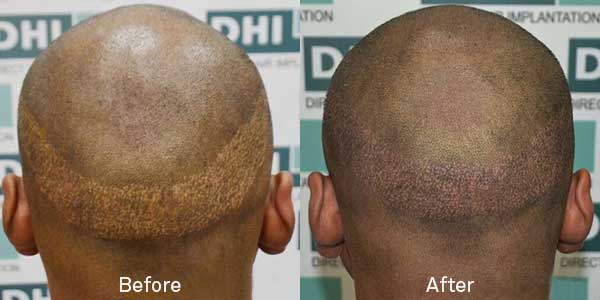
FUT and FUE procedures may leave scars after hair transplantation. Using DHI, hair follicles are carefully implanted into scarred areas. Once the follicles adapt and grow successfully, the remaining procedure is completed to ensure natural density and coverage.
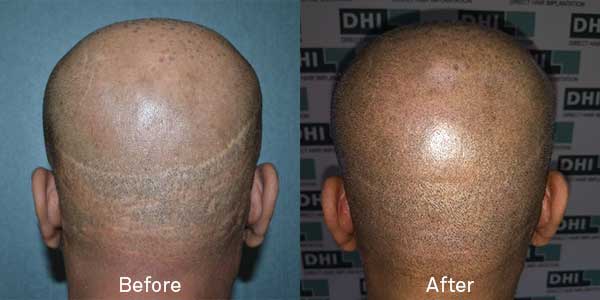
FUT scars can be effectively repaired using techniques such as Scalp Micropigmentation (SMP) and Direct Hair Implantation (DHI). These procedures are designed to conceal and improve the appearance of FUT scars.
Both Scalp Micro-Pigmentation (SMP) and Direct Hair Implantation (DHI) are minimally invasive procedures and generally cause minimal discomfort. Local anaesthesia is commonly used to ensure patient comfort.
Yes, these scar repair treatments are designed to deliver natural-looking results. The aim is to reduce the visibility of FUT scars and help them blend naturally with surrounding hair and skin.
Scalp Micro-Pigmentation (MPG) is a permanent solution, while Direct Hair Implantation (DHI) uses transplanted hair follicles that are also permanent. Together, these treatments offer long-lasting results for FUT scar repair.